Shanghai Institute of Technology (SIT) hosted a forum on translation technology and talent development on November 6-7. Co-organized by RWS and the SIT School of Foreign Languages, the event gathered experts to discuss the impact of artificial intelligence on language services and education.
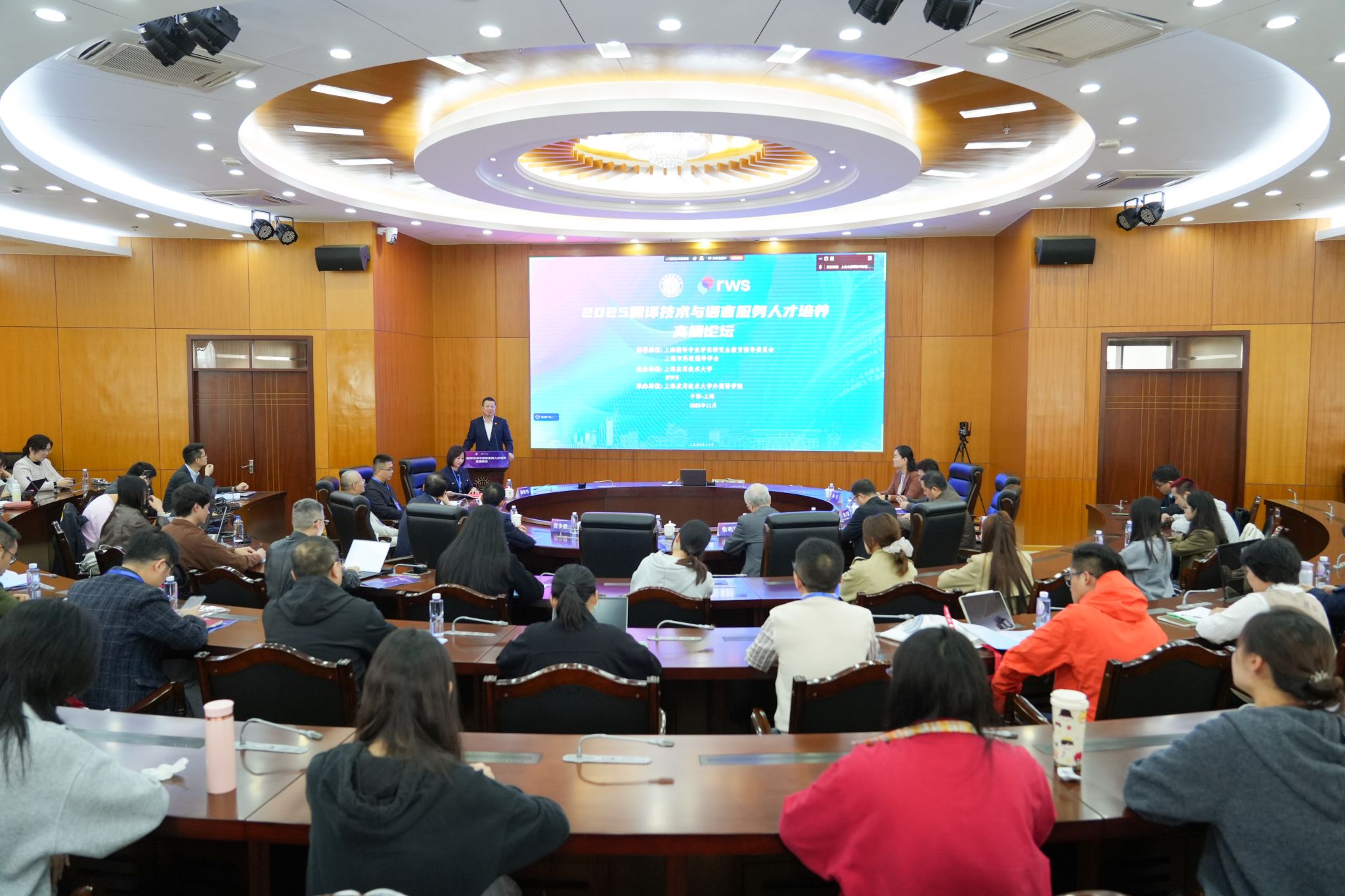
In his opening address, SIT President Wang Xiaofan highlighted the university's commitment to integrating technology and education. He stressed the importance of using AI to enhance translation training and develop new approaches to talent cultivation.
Huang Youyi, Executive Vice President of the Translators Association of China, noted the growing need for translators skilled in using AI tools and for specialists who can develop language resources to train AI systems. Chai Mingjiong, Chairman of the Shanghai Municipal Committee for Graduate Education in Translation and Interpreting, highlighted a continued shortage of senior translation professionals and emphasized the need for solid language skills alongside technical competence. Hu Kaibao, Chairman of the Shanghai Society for Science and Technology Translation, discussed the crucial role of language data (corpus) construction in the development of AI technologies.
During the forum, scholars from institutions including Beijing Foreign Studies University, Shandong Normal University, and the University of Macau shared research on integrating AI into translation education. They addressed topics such as ethical practices and new training models for human-AI collaboration. Representatives from companies such as iFLYTEK and Huawei shared industry perspectives on how AI technologies are shaping translation practices and training needs. Parallel discussion sessions focused on practical strategies for educating translators in the AI era, combining technological training with the development of critical thinking skills.
In closing, SIT leadership emphasized the forum's role in shaping the future of translation education. The event provided a platform for sharing insights on training translators to work effectively with AI and meet the demands of the evolving language services industry.

 沪公网安备31012002003754号 沪ICP备09000134号-1